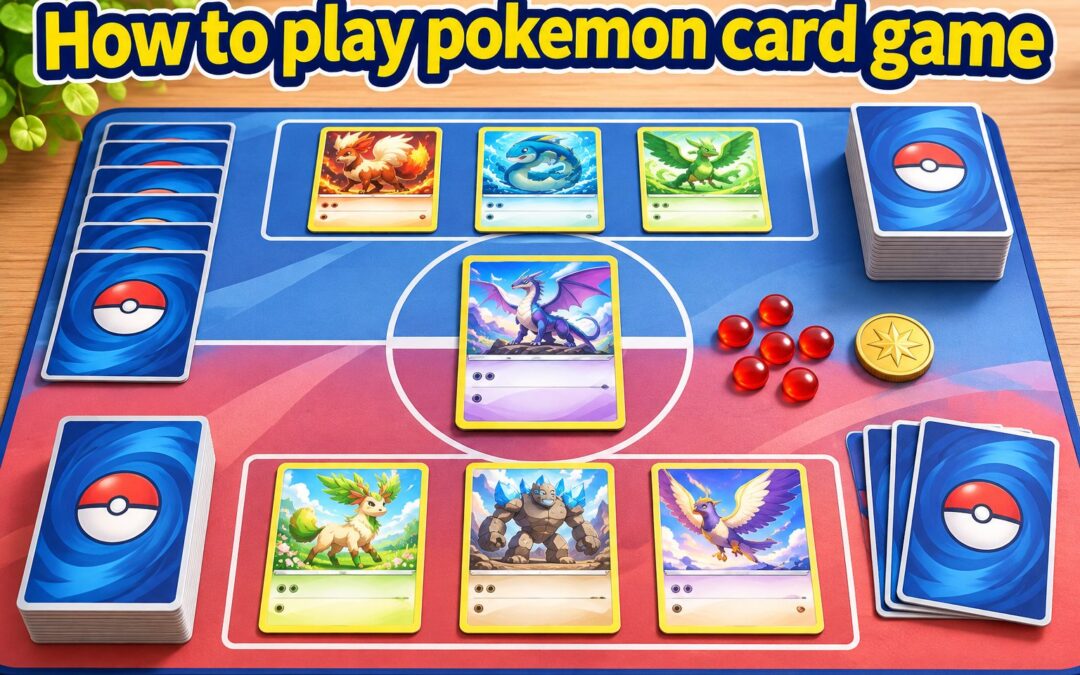
Learning how to play Pokemon card game matches is easier than it first appears. Two players build decks around Pokémon, Energy, and Trainer cards, then take turns preparing Pokémon and attacking. Your main goal is usually to collect all six Prize cards by Knocking Out opposing Pokémon, although a player can also win when the opponent has no Pokémon left in play or cannot draw a card at the start of a turn. This guide explains the essential rules in beginner-friendly language, from identifying card types and setting up the table to evolving Pokémon, using attacks, and building a reliable deck. You will also learn how Special Conditions work, which mistakes commonly slow new players down, and how to make better decisions during real matches. Card wording and official formats can change, but the core process below gives you a practical foundation for casual games and organized play.
Pokemon Trading Card Game Basics
The Pokémon Trading Card Game is a turn-based strategy game for two players. Each player controls Pokémon, attaches Energy, plays helpful Trainer cards, and tries to Knock Out the opponent’s Pokémon.
The Active Spot holds the Pokémon that normally attacks and receives attacks. Each player may also keep up to five Pokémon on the Bench. Benched Pokémon usually cannot attack, but they can evolve, receive Energy, use certain Abilities, and move into the Active Spot later.
Every deck contains exactly 60 cards in standard constructed play. Except for Basic Energy, cards with the same name are normally limited to four copies. A functional deck balances Pokémon with cards that help find resources, draw new hands, switch positions, and attach the right Energy.
The game is not simply about using the Pokémon with the most HP. Strong play depends on consistency, timing, resource management, and choosing the right target. A modest attack used at the right moment can matter more than a powerful attack that takes too long to prepare.
Reading each card carefully is essential. If a card’s wording changes a normal rule, follow the card’s instructions. When playing in a particular format or event, confirm that the cards in your deck are legal for that environment.
Why Learning The Pokemon Card Game Is Worthwhile
The game combines recognizable characters with accessible rules and meaningful strategic choices. Beginners can enjoy simple matches, while experienced players can explore advanced deck building and tournament play.
- Strategic thinking: Players evaluate threats, plan future turns, and decide how to use limited cards efficiently.
- Reading practice: Attacks, Abilities, and Trainer effects encourage careful reading and accurate interpretation.
- Social play: Matches create a structured activity for friends, families, collectors, and local communities.
- Adaptable difficulty: Starter products support simple games, while custom decks provide deeper challenges.
- Creative deck building: Players can experiment with Pokémon, tactics, and Energy combinations that match their preferred style.
- Collecting with purpose: Cards become playable resources rather than objects that only remain in a binder.
Cards You Need To Play Pokemon
A legal deck uses three broad card categories. Knowing their roles makes it easier to read a hand and decide what to play.
1. Basic Pokemon
Basic Pokémon can usually be placed directly onto the field. You need at least one in your opening hand to begin the game. A Basic Pokémon may start in the Active Spot or sit on the Bench, where it can prepare for a later attack or evolution.
2. Evolution Pokemon
Stage 1 Pokémon evolve from the Basic Pokémon named on their cards, while Stage 2 Pokémon usually evolve from the appropriate Stage 1. Evolution generally increases HP and improves attacks or Abilities. A Pokémon normally cannot evolve during the turn it entered play or on either player’s first turn.
3. Energy Cards
Energy pays attack costs. Basic Energy may be included in a deck without the normal four-copy restriction. Special Energy can provide useful additional effects, but it follows the restrictions and wording printed on the card. Players normally make only one Energy attachment from their hand each turn.
4. Item Cards
Item cards create immediate effects such as searching the deck, switching Pokémon, or recovering resources. Players can usually use several Items during one turn. After resolving an Item, place it in the discard pile unless its instructions say otherwise.
5. Supporter Cards
Supporters often provide strong draw, search, or disruption effects. You may normally play only one Supporter during your turn, so choosing the right one is important. A useful Supporter played too early may leave you without the effect you need later.
6. Stadium And Pokemon Tool Cards
A Stadium changes conditions for both players and remains in play until another effect removes or replaces it. A Pokémon Tool is attached to a Pokémon and supplies an ongoing benefit or effect. Follow current card text and rules concerning how Tools may be attached.
How To Set Up A Pokemon Card Game
Before the first turn, prepare the deck, Active Pokémon, Bench, and Prize cards in the correct order. Both players should leave enough table space for every play area.
1. Prepare A Legal Deck
Each player brings a 60-card deck and keeps it separate from the opponent’s cards. Before playing, agree on the format and whether casual substitutions are allowed. Using decks designed for similar experience and power levels usually creates a better learning game.
2. Shuffle The Deck
Shuffle thoroughly so that cards from a previous match are no longer grouped together. Offer the deck to the opponent to cut or shuffle if appropriate. Good randomization helps ensure that neither player knows where particular cards are located.
3. Draw Seven Cards
Each player draws an opening hand of seven cards. Keep the cards hidden from the opponent unless an effect says to reveal them. Look for at least one Basic Pokémon, because a player cannot complete setup without one.
4. Resolve A Mulligan
If your hand contains no Basic Pokémon, reveal the hand, shuffle it back into the deck, and draw seven new cards. Repeat until you have a Basic Pokémon. The opponent may draw an additional card for each mulligan after completing setup.
5. Choose An Active Pokemon
Place one Basic Pokémon face down in the Active Spot. This Pokémon will begin the battle. Consider its attack cost, Retreat Cost, HP, and role in your strategy instead of automatically choosing the Pokémon with the highest damage.
6. Fill The Bench
You may place up to five additional Basic Pokémon face down on your Bench. You do not have to reveal every useful Basic immediately, but a well-planned Bench can provide backup attackers and prevent an early loss.
7. Place Six Prize Cards
Put the top six cards of your deck face down to one side as Prize cards. You generally take a Prize after Knocking Out an opposing Pokémon. Certain powerful Pokémon allow the opponent to take more than one Prize when Knocked Out.
8. Decide Who Goes First
Use a coin flip or another random method to choose the starting player. Both players then reveal their Active and Benched Pokémon. The first player has special first-turn restrictions, including normally being unable to attack or play a Supporter.
How A Pokemon Card Game Turn Works
A turn follows a predictable flow. You draw first, take available actions in any useful order, attack if possible, and then end your turn.
1. Draw A Card
Begin every turn by drawing one card from the top of your deck. This draw is mandatory. If you cannot draw because your deck is empty, you lose the game immediately, making deck size an important late-game resource.
2. Place Basic Pokemon
You may play Basic Pokémon from your hand onto open Bench spaces. Building the Bench provides alternatives if your Active Pokémon retreats or is Knocked Out. Avoid filling every space without a reason, because you may need room for a better Pokémon later.
3. Evolve Your Pokemon
Place an appropriate Evolution card on top of the Pokémon named in its evolution box. Keep previous stages underneath it. Evolution removes existing Special Conditions, but damage remains. Pokémon generally cannot evolve on the first turn or during the turn they entered play.
4. Attach One Energy
Once per turn, you may attach an Energy card from your hand to one of your Pokémon. This regular attachment is separate from effects that accelerate Energy. Plan attachments ahead so that an attacker becomes ready when you need it.
5. Play Trainer Cards And Abilities
Use Items, one Supporter, Stadiums, Tools, and available Abilities as their text permits. These actions may often be taken in any order before attacking. Search and draw effects are especially valuable because they help you find missing Pokémon, Energy, or switching options.
6. Retreat If Needed
You may normally retreat once per turn by discarding Energy from the Active Pokémon equal to its Retreat Cost. Move that Pokémon to the Bench and promote a Benched Pokémon. Switching through a card effect is different and does not count as the normal retreat.
7. Attack And End The Turn
Choose one attack on your Active Pokémon and confirm that the required Energy is attached. Resolve damage and all written effects in order. Attacking ends your turn, so complete every other intended action before announcing the attack.
How Attacks And Damage Work
Attacks are the main way to Knock Out Pokémon and collect Prize cards. Accurate calculation prevents confusion and helps both players learn good habits.
Check the attack cost printed to the left of the attack name. A Colorless symbol can be satisfied by most types of Energy, while a specific Energy symbol requires the corresponding type or another card that explicitly provides it.
Announce the chosen attack and follow its instructions. Apply any required coin flips, damage modifiers, or additional effects. Damage is usually shown as a number beside the attack, while an attack with no printed damage may still create an important effect.
Next, check Weakness and Resistance on the Defending Pokémon. Weakness normally increases damage according to the printed modifier, while Resistance reduces damage by the stated amount. Do not apply either unless the attacking card or another effect instructs you to calculate damage differently.
Place damage counters on the defending Pokémon. Damage remains after a Pokémon retreats or evolves unless a card removes it. When accumulated damage equals or exceeds the Pokémon’s HP, that Pokémon is Knocked Out.
The Knocked Out Pokémon and all attached cards normally go to the discard pile. The player who scored the Knock Out takes the correct number of Prize cards, and the defending player promotes a Benched Pokémon if one is available.
Special Conditions In Pokemon Battles
Special Conditions interfere with an Active Pokémon. They are usually removed when that Pokémon evolves, retreats to the Bench, or leaves play.
1. Asleep
Turn an Asleep Pokémon sideways. It cannot attack or retreat normally. During Pokémon Checkup between turns, flip a coin. On heads, the Pokémon wakes up; on tails, it remains Asleep. Switching effects can provide another way to move it out of danger.
2. Burned
Mark a Burned Pokémon with the appropriate condition marker. During Pokémon Checkup, place two damage counters on it and then flip a coin. On heads, it recovers from Burned; on tails, the condition remains for the next checkup.
3. Confused
Turn a Confused Pokémon upside down. When it tries to attack, flip a coin. On heads, the attack proceeds normally. On tails, the attack fails and damage is placed on the attacking Pokémon according to the current Confusion rule.
4. Paralyzed
Turn a Paralyzed Pokémon sideways to show its condition. It cannot attack or retreat normally. Paralysis usually ends after that player’s next turn during Pokémon Checkup, although card effects may change how long it lasts or remove it sooner.
5. Poisoned
Place a Poison marker on the affected Pokémon. During each Pokémon Checkup, put one damage counter on it unless an effect changes that amount. Poison can gradually secure a Knock Out even when an attack does not cause enough immediate damage.
6. Multiple Special Conditions
A Pokémon can be Burned and Poisoned while also being Asleep, Confused, or Paralyzed. However, Asleep, Confused, and Paralyzed replace one another because they use competing card orientations. Use separate markers and resolve every applicable condition during Pokémon Checkup.
Ways To Win A Pokemon Card Game
Most matches are won through Prize cards, but there are three standard victory paths that every player should remember.
- Take your final Prize card after earning the required Prizes from Knock Outs or card effects.
- Leave the opponent with no Pokémon in play after their Active Pokémon is Knocked Out.
- Win when the opponent cannot draw a card at the beginning of their turn.
- Track multi-Prize Pokémon carefully because one Knock Out can change the game quickly.
- Protect your Bench so that losing the Active Pokémon does not leave your field empty.
- Watch both deck sizes when a long match makes drawing out a realistic possibility.
How To Build A Beginner Pokemon Deck
A beginner deck should perform its main strategy consistently rather than include too many unrelated ideas. Start with a clear attacker and add cards that help it function.
1. Choose A Main Attacker
Select a Pokémon with an attack you can power reliably. Consider how much Energy it needs, how quickly it can enter play, and how many Prizes it gives up. A simple attacker with dependable damage is often better for learning than a complicated combination.
2. Add Supporting Pokemon
Support Pokémon should improve consistency, accelerate Energy, draw cards, protect the field, or provide a useful secondary attack. Every Pokémon should have a purpose. Adding favorites without considering their roles can create hands that do not work together.
3. Build Reliable Evolution Lines
If your strategy uses Evolution Pokémon, include enough copies of each necessary stage and suitable search cards. Too few Basic or Stage 1 cards can leave the final Evolution stranded in your hand. Test the line and adjust it based on actual results.
4. Include Search And Draw Cards
Trainer cards that find Pokémon or refresh the hand make a deck more consistent. They reduce dependence on lucky top decks and help assemble the same plan in multiple games. Reliable access to resources usually matters more than including many situational effects.
5. Use A Sensible Energy Count
Energy requirements vary by deck, so there is no perfect count for every strategy. Avoid adding excessive Energy simply because attacks require it. Search, recovery, and acceleration cards can make a moderate Energy count more reliable than an overloaded deck.
6. Test And Adjust The List
Play several games before changing many cards. Record which cards remain unusable, which resources are frequently missing, and which matchups cause trouble. Replace weak or overly situational choices gradually so you can tell whether each adjustment improves performance.
Common Pokemon Card Game Mistakes To Avoid
Many beginner errors come from acting too quickly or focusing only on immediate damage. Slowing down and checking the board usually leads to stronger decisions.
1. Attaching Energy Without A Plan
An Energy attachment cannot usually be moved freely, so every attachment should support a future attack or retreat. Spreading Energy across too many Pokémon may leave all of them unprepared. Decide which attacker you expect to use over the next two turns.
2. Playing Trainer Cards Too Early
Using every playable card immediately can waste valuable effects or reveal your plan. Search first when it improves later draws, but save situational Items until they matter. Before playing a Supporter, check whether another available action would make its effect more useful.
3. Filling The Bench Carelessly
A full Bench can prevent you from playing an essential support Pokémon or backup attacker. Weak Benched Pokémon may also become easy Prize targets. Add Pokémon because they contribute to your plan, not merely because you can place them down.
4. Forgetting Retreat Options
A powerful Pokémon can become trapped in the Active Spot when it lacks the correct Energy or has a high Retreat Cost. Include switching cards and monitor retreat requirements. Preparing an escape route prevents Special Conditions or unfavorable matchups from stopping your strategy.
5. Ignoring The Opponent’s Threats
Watching only your own field makes surprise Knock Outs more likely. Check the opponent’s Energy, Evolution possibilities, Bench, discard pile, and remaining Prize count. Consider what their strongest next turn could look like, then protect the Pokémon or resource they are likely to target.
6. Misreading Card Text
Small words can change an effect dramatically. A card may refer only to the Active Pokémon, require a discard, or limit which card can be searched. Read the entire effect before resolving it, and separate attack damage from additional effects when checking Weakness.
Best Practices For Better Pokemon Matches
Once the basic rules feel comfortable, focus on planning, information, and efficient use of resources. These habits improve both casual and competitive play.
1. Review The Board Before Acting
At the start of each turn, inspect both Active Pokémon, both Benches, attached Energy, Stadiums, Tools, discard piles, and Prize totals. This quick review reduces mistakes and helps you identify the safest path before committing cards from your hand.
2. Plan More Than One Turn Ahead
Ask which Pokémon should attack now and which one should be ready next. Consider how the opponent might respond. A good plan includes a backup attacker, enough Energy, and a way to recover if the current Active Pokémon is Knocked Out.
3. Track Important Resources
Pay attention to how many switching cards, Energy, search cards, and key Evolution pieces have been used. You do not need to memorize everything immediately. Start by tracking the few cards that determine whether your main strategy can continue.
4. Protect Your Win Condition
Identify the sequence of Knock Outs needed to take your remaining Prize cards. Sometimes attacking a weaker Benched Pokémon is better than damaging the Active Pokémon. In other situations, protecting your prepared attacker matters more than taking an immediate Prize.
5. Practice With The Same Deck
Repeated play with one deck teaches you which opening hands are keepable, which cards should be searched first, and how long your setup requires. Familiarity also makes it easier to notice genuine deck problems instead of blaming every loss on bad luck.
6. Communicate Clearly During Play
Announce attacks, Abilities, Trainer cards, and important effects. Keep damage counters, discard piles, and markers visible. Clear communication makes the game easier to follow, prevents accidental rule disputes, and creates a more enjoyable experience for both players.
Frequently Asked Questions
1. How Many Cards Do You Need To Play Pokemon?
A standard constructed deck contains exactly 60 cards. You also need damage counters, condition markers, and a randomizer such as a coin. Two prebuilt decks are often the easiest starting point because they provide balanced card selections and clear strategies for beginners.
2. How Many Pokemon Can Be On The Bench?
A player may normally have up to five Pokémon on the Bench. Some card effects can change this limit. If your Bench is full, you cannot place another Basic Pokémon there unless an effect creates space or specifically permits another placement.
3. Can You Attack On The First Turn?
The player who goes first normally cannot attack during that first turn. The second player can usually attack on their first turn if all attack requirements are met. Specific card effects can create exceptions, so follow the wording on the cards being used.
4. Can You Evolve A Pokemon Immediately?
A Pokémon generally cannot evolve during the same turn it was played, and neither player can normally evolve on their first turn. Once it has remained in play through the beginning of your turn, you may evolve it one stage if you have the appropriate card.
5. What Happens When A Pokemon Is Knocked Out?
Place the Knocked Out Pokémon and its attached cards in the owner’s discard pile. The attacking player takes the number of Prize cards specified by the defeated Pokémon. If necessary, the defending player then moves a Benched Pokémon into the Active Spot.
6. Do You Need Expensive Cards To Start Playing?
No. Preconstructed decks are suitable for learning and casual matches, and players can improve them gradually. Expensive collectible cards are not automatically stronger in play. Consistency, legal card selection, balanced matchups, and familiarity with the deck matter more for a beginner.
Conclusion
The easiest way to learn the Pokémon Trading Card Game is to master one part at a time. Begin with card types and setup, then practice the turn sequence, Energy attachments, evolution, retreating, attacks, Knock Outs, and Prize cards. Once those rules feel natural, improve your deck building and decision-making.
Use a straightforward deck, read every effect carefully, and play several low-pressure practice matches. Mistakes are a normal part of learning. With repetition, you will recognize threats earlier, manage resources more efficiently, and make each turn with greater confidence.